
Sensitive Teeth After Whitening? Here’s What You Can Do

Teeth whitening is among the most sought-after cosmetic dental treatments in the United States, with millions choosing to enhance their smiles each year. A brighter smile is a common goal, whether achieved professionally at a dental clinic or with over-the-counter products. However, one prevalent side effect of teeth whitening is tooth sensitivity.
According to the American Academy of Cosmetic Dentistry, approximately 40 million Americans use teeth-whitening products annually. Despite its popularity, studies indicate that nearly 30% of individuals experience tooth sensitivity following the procedure.
Although this sensitivity is typically temporary, it can cause significant discomfort, prompting concerns about managing it. If you have recently undergone teeth whitening and are experiencing sensitivity, here’s what you need to know about its causes and effective ways to alleviate it.
Why Does Sensitivity Happen After Dental Bleaching?
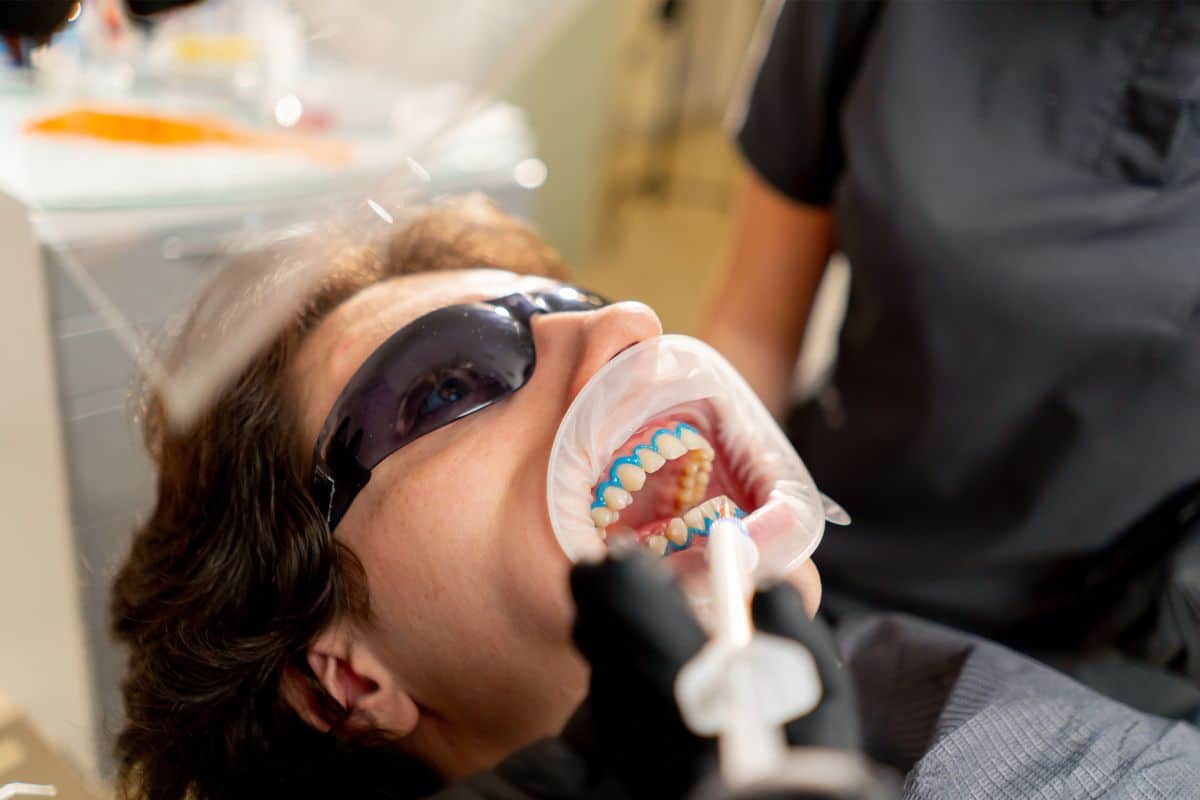
Dental whitening involves using bleaching agents to break down stains on the surface of the enamel. However, these agents, mainly hydrogen peroxide or carbamide peroxide, can cause teeth to become sensitive for some time.
The outer layer of your teeth, the enamel works as the protective layer. When you bleach the teeth, the bleaching products penetrate the outer layer and reach the inner tissue of the tooth, where the nerves are located. This process causes the nerves to become too irritated, leading to pain and sensitivity.
Some Of The Factors That Contribute To Sensation After Teeth Bleaching Are-
- Porous Enamel- Teeth with porous enamel absorb the whitening agent quickly, increasing sensitivity.
- Existing Dental Problems- If you already have cavities, gum recession, or cracks, your teeth might become prone to sensation during bleaching.
- Overuse of Whitening Products—Excessive use of over-the-counter whitening agents leads to enamel erosion, making teeth more sensitive.
How To Deal With Tooth Sensitivity After Bleaching?
While teeth sensitivity can be too discomforting, there are many ways to reduce issues and ensure faster recovery-
- Use Desensitizing Toothpaste
One of the most effective solutions to ease sensitivity is using a toothpaste designed only for teeth that hurt. Dental care products contain compounds that help block the transmission of pain signals from the surface of the enamel to the nerves, relieving pain. Switching to a desensitizing paste both during and after the bleaching treatment is a good idea.
- Avoid Extreme Temperature
After tooth bleaching, your teeth become more sensitive to hot or cold food and beverages. Until your sensitivity goes away, avoid consuming extremely hot or cold items. Choose lukewarm drinks and food to prevent further issues.
- Reduce Acidic Food and Drinks
Acidic food and beverages like citrus fruits, tomatoes, and carbonated drinks can increase tooth sensitivity. These items can damage enamel over time, which might already be compromised due to the bleaching. It is good to limit the intake of these acidic foods while the teeth are healing.
- Take Break Between Whitening Sessions
If you are using at-home whitening products, take a break between treatments. Overusing bleaching products can increase sensitivity. Instead, allow your teeth to recover to reduce pain and discomfort between sessions.
- Visit A Cosmetic Dentist For Professional Care
If your sensitivity persists, consult a dental practitioner. They can offer professional treatment like fluoride or prescribe a stronger desensitizing agent. The expert will evaluate whether there is any underlying issue, like gum recession, that might contribute to sensitivity.
Teeth Whitening in Centennial: Professional Care for a Brighter Smile
If you’re considering teeth whitening in Centennial, it’s advisable to speak with a professional to guarantee that the procedure is safe and effective. A dentist can customize the treatment according to your individual needs and monitor your dental health during the process to reduce the likelihood of issues like sensitivity. Professional whitening solutions offer more durable results with less discomfort than over-the-counter options.
Experiencing tooth sensitivity after whitening is common, but it can be effectively managed with proper care. Simple measures such as using toothpaste designed for sensitive teeth, avoiding extreme temperatures, and spacing out whitening sessions can help minimize discomfort while preserving your bright, confident smile.
If you are considering teeth whitening and want to ensure a safe and practical experience, contact Signature Orthodontics. Our experienced team is committed to providing exceptional care, ensuring your whitening treatment is comfortable and successful. Schedule a consultation with us today to get started.