
Teeth Still Yellow After Whitening? Here’s What Your Teeth Are Trying to Tell You
The Moment You Notice It Didn’t Work
You did everything right. You skipped the coffee for a few days, followed the whitening strip instructions to the letter, or maybe even paid for an in-office treatment before a wedding, a reunion, or a big interview. Then you looked in the mirror afterward – and the yellow was still there, staring back.
If that disappointment sounds familiar, you’re not imagining things, and you’re not doing anything wrong. If your teeth still look yellow after teeth whitening, the issue often isn’t the product you used. It’s the type of stain sitting underneath it.
Why Whitening Doesn’t Always Deliver the Results You Expected
This is one of the most common frustrations we hear at our Centennial office. Patients come in after trying strips, trays, or charcoal powders from the drugstore, and the color barely moved – or it lightened in some spots and not others. Teeth near the gumline often stay darker. So do the areas between teeth, or a single tooth that looks noticeably different from the ones next to it.
None of that means the product failed at its job. It means the product was only ever built to handle one kind of stain, and your teeth may be dealing with a different one entirely.
Not every yellow smile needs the same treatment. If you’re still unsure whether professional whitening is even the right solution, our guide on “5 Signs That Your Teeth May Need Whitening“ explains the common signs dentists look for before recommending treatment.
Why It Matters: Not All Yellow Is the Same
Tooth discoloration generally falls into two categories, and understanding the difference changes everything about what to try next.
Extrinsic stains sit on the surface
These are caused by everyday habits – coffee, tea, red wine, tobacco, and plaque buildup that clings to enamel over time. Extrinsic stains respond well to whitening because the treatment works on the outer layer of the tooth, right where the discoloration lives.
Intrinsic stains live deeper
Intrinsic discoloration develops inside the dentin, the layer beneath enamel. It can be caused by aging, certain childhood medications, fluorosis, a past injury to the tooth, or genetics. Because the color isn’t on the surface, a whitening gel has nowhere to reach it — no matter how many rounds you do.
| Did You Know? Whitening products are designed to lift surface (extrinsic) stains. Intrinsic stains sit beneath the enamel, which is why over-the-counter treatments often leave them untouched. |
Extrinsic vs. Intrinsic Stains at a Glance
| Stain Type | Where It Lives | Common Causes | Responds to Whitening? |
|---|---|---|---|
| Extrinsic (surface) stains | Outer layer of enamel | Coffee, tea, red wine, tobacco, plaque buildup | Yes — usually |
| Intrinsic (deep) stains | Inside the dentin, beneath enamel | Aging, certain medications, fluorosis, trauma, genetics | No — needs a different approach |
| Restoration-related color | Crowns, veneers, fillings, bonding | Existing dental work does not contain enamel | No — will not bleach |
The Risks of Chasing Results With More Whitening
When whitening doesn’t work the first time, the instinct is usually to try again — a stronger strip, a longer treatment, a second box. That instinct can backfire.
- Enamel wear: Repeated over-the-counter use can wear down enamel faster than it rebuilds, leaving teeth more vulnerable over time.
- Tooth sensitivity: Bleaching agents used too often or left on too long are a leading cause of short-term sensitivity to hot and cold.
- Gum irritation: Ill-fitting trays or overlapping strip use can irritate soft tissue around the teeth.
- Uneven color: Crowns, veneers, bonding, and fillings do not contain enamel, so they will not lighten — which can leave a mismatched smile even after a tooth technically got brighter.
- Wasted time and money: Continuing a routine that isn’t working can delay a conversation that would actually solve the problem.
The Professional Solution: Finding Out What Whitening Can’t Fix
A dental exam is the fastest way to understand what’s actually happening with your color. During a whitening consultation, a dentist checks whether your discoloration is extrinsic, intrinsic, or related to existing dental work — and each answer points to a different path forward.
If it’s extrinsic
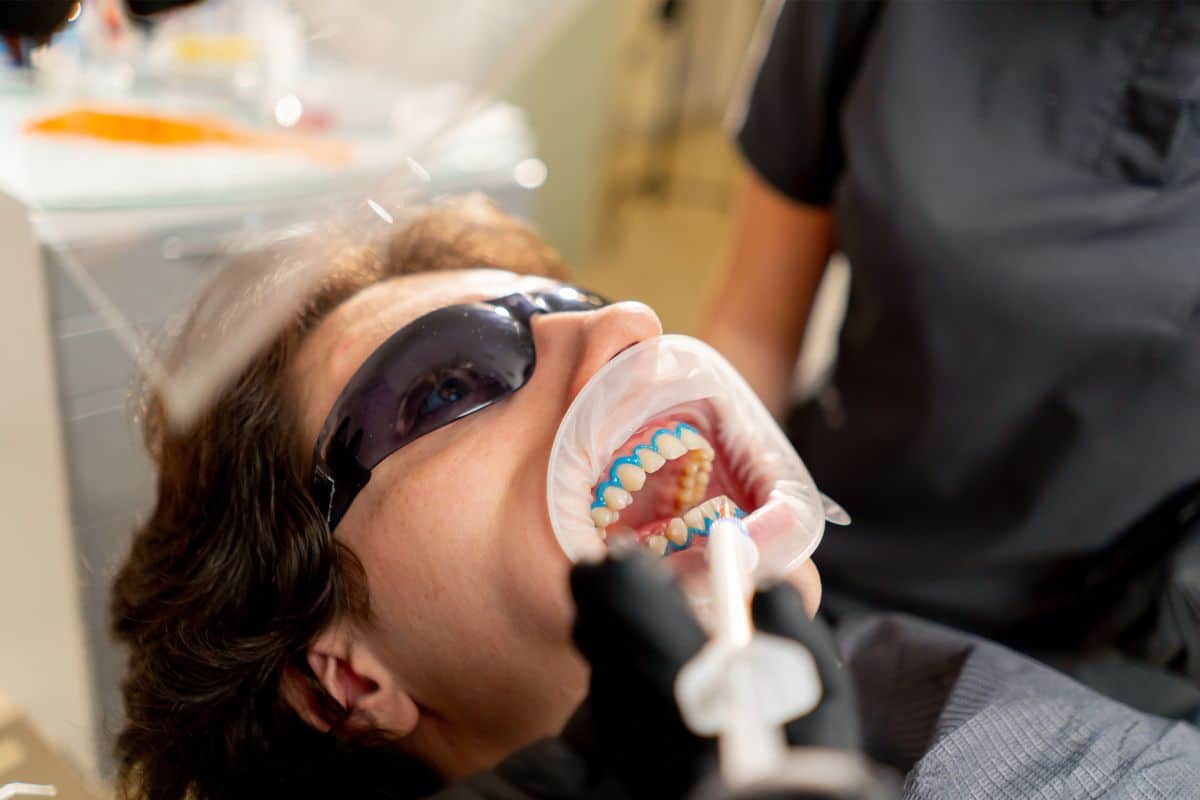
A dentist-supervised whitening treatment, using a higher concentration than what’s available over the counter, is typically far more effective and more evenly applied than drugstore versions. Custom-fitted trays also help the whitening gel reach every surface evenly, including the areas near the gumline that store-bought strips tend to miss.
Once you’ve achieved the shade you want, maintaining those results is just as important as the treatment itself. Our article “Top 6 Tips for Lasting Teeth Whitening Results“ shares simple everyday habits that can help your brighter smile last longer.
If it’s intrinsic
Whitening alone usually won’t change the outcome. Options like bonding or veneers are designed to address discoloration that lives beneath the surface, restoring an even, natural-looking color rather than trying to bleach something that isn’t reachable.
Meet Dr. Jason Morris

Dr. Jason Morris believes that successful cosmetic dentistry starts with understanding the reason behind a patient’s concerns—not simply recommending a treatment. When someone is disappointed that their teeth still look yellow after whitening, he takes the time to determine whether the discoloration is caused by surface stains, changes within the tooth, or existing dental work before discussing the next steps.
Rather than encouraging patients to keep trying products that may not address the real issue, Dr. Morris focuses on providing clear explanations and personalized recommendations. His goal is to help every patient understand why whitening did or didn’t work and guide them toward the solution that will deliver the most natural, long-lasting results for their smile. Call us to book an appointment!
⭐⭐⭐⭐⭐ Ellen Brinton
We have been so impressed with the care we receive at this office. They are extremely attentive and friendly and always make my kids feel comfortable. We couldn’t be happier
| Ready to Find Out What’s Really Behind the Yellow? A short consultation can tell you more than another round of strips ever will. Our Centennial team will take a real look and map out what will actually work for your smile. Schedule a Consultation! |
Local Authority: Whitening Support for Centennial Patients
Signature Orthodontics has worked with patients throughout Centennial and the surrounding Denver metro area who’ve hit the same wall — home whitening that plateaus, or results that fade faster than expected. Colorado’s dry climate and altitude don’t change how stains form, but a local team that sees these patterns regularly can spot the difference between a stain that needs more gel and one that needs a different plan altogether.
Whether you’re weighing professional whitening treatment for the first time or trying to understand why a past attempt underdelivered, an in-person look at your teeth is the only way to know for certain what you’re working with.
Frequently Asked Questions
1. Why do my teeth still look yellow after whitening?
Whitening treats surface (extrinsic) stains caused by things like coffee, tea, or tobacco. If your discoloration is intrinsic—meaning it sits deeper inside the tooth—or is related to a crown or filling, whitening gel cannot reach or change that color.
2. What’s the difference between intrinsic and extrinsic tooth stains?
Extrinsic stains sit on the enamel surface and are typically caused by foods, drinks, tobacco, and plaque buildup. Intrinsic stains develop inside the tooth due to aging, certain medications, fluorosis, or trauma, and they do not respond to surface-level whitening treatments.
3. Can whitening strips fix yellow teeth near the gumline?
Not always. Whitening strips can shift during use and often do not seal evenly against the gumline, leaving that area darker than the rest of the tooth even after multiple treatments.
4. Will professional teeth whitening work better than store-bought kits?
For surface stains, professional whitening typically uses a stronger, dentist-supervised whitening formula with custom-fitted trays, producing more even and longer-lasting results than over-the-counter products.
5. Why is one of my teeth darker than the others after whitening?
A single darker tooth may indicate an old injury, an existing filling, or a crown that does not respond to whitening like natural enamel. A dental evaluation can determine the underlying cause and recommend the most appropriate treatment.
6. Is it safe to keep whitening if the first round didn’t work?
Repeated whitening without understanding why the initial treatment failed can increase the risk of enamel wear, tooth sensitivity, and gum irritation without improving the results. A professional consultation is the safest next step.
7. Does teeth whitening remove stains from fillings or crowns?
No. Whitening only changes the color of natural tooth enamel. Crowns, veneers, bonding, and fillings are made from materials that do not bleach, which may create a noticeable color difference after whitening.
8. How do I know if I need a whitening consultation instead of another kit?
If you’ve completed a full round of over-the-counter whitening and still notice yellowing, uneven color, or one tooth that remains darker than the others, it’s time to schedule a professional whitening consultation to identify the real cause.